Interview: Leo Shibanuma
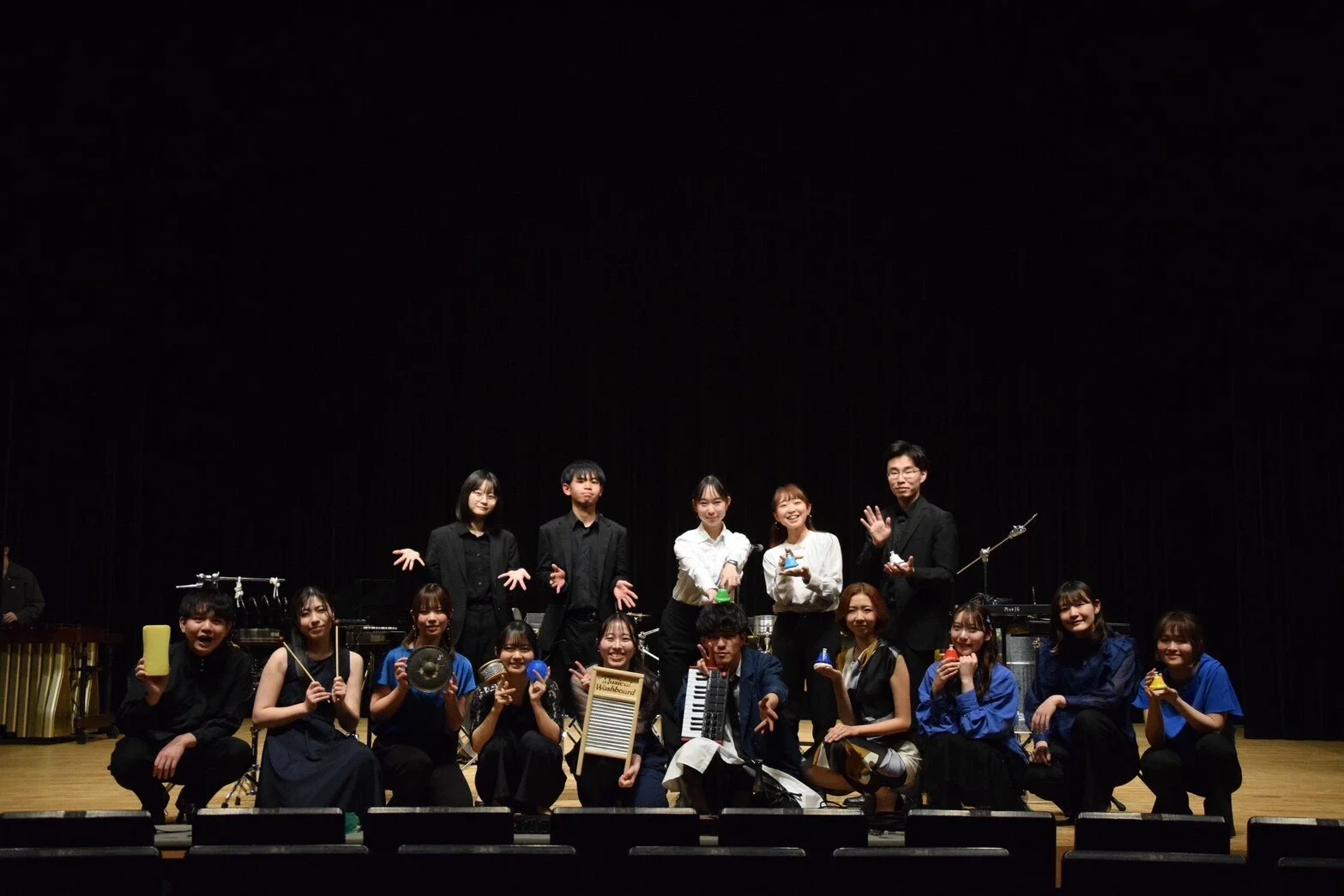
Photo by Haruki Tanaka.
Interview with percussionist Leo Shibanuma for note magazine. In March 2026, Leo organised a concert in Shibuya called ‘CROSSWHEN II - Ben Nobuto Mix,’ featuring pieces like SERENITY 2.0, Daily Affirmation, Baby Lexicon and a new percussion duo called Object Blessing. We had messaged for over a year on Instagram but this was the first time we spoke face-to-face (over Zoom - thanks to Aoi Matsushima for interpreting). From March 2026.
Read the full interview here.
Excerpt
Leo: In your works, you quote various kinds of material. That kind of process has also been explored by composers like Shostakovich, Bartók, and even Takemitsu. I find that whole context of quotation really fascinating. For example, in SERENITY 2.0, you reference ’80s J-pop.
Ben: I think sampling is a bit like folk art. Like when children make collages at school, cutting up newspapers and creating something new. It’s simple, childlike: you gather little objects from everywhere and create something out of them. It feels very intuitive to me. I like using sounds that carry cultural meanings, sounds that can be interpreted differently depending on the listener. J-pop, for example, means different things to different people. It’s like collecting tiny fragments of sound from various parts of culture . . . almost like trying to understand the world through them.
Leo: I don’t fully know why myself, but I’m really drawn to works that do that, where something that doesn’t originally belong suddenly intrudes and appears. I think I’m fascinated by that sense of dissonance or displacement.
Ben: Like something being recontextualised?
Leo: Yeah, exactly. There’s a kind of trick to it, but also, when something is quoted in a completely different context, it feels like it gets transformed, either elevated to an excessive level or reduced to something trivial. That shift really interests me . . . Going back to what we were talking about earlier, there’s also this idea that it’s not necessarily a good thing—like brain rot, where excessive digital media consumption affects cognition. People say young audiences can’t read long texts or listen to long pieces anymore, and that’s actually happening. Even though I feel it’s not entirely good, I still find that whirlwind of information fascinating.
Ben: With so much information flying around, it’s natural to want to distance yourself from it, to move in the opposite direction and disconnect. But on the other hand, it might also be interesting to dive into it and actively embrace everything within that world.
Leo: I feel like I can glimpse that kind of thinking in your music.
Ben: There’s a huge amount of energy in that environment, that endless stream of images and videos etc. That energy is often just used to grab attention, not always in positive ways, but I’m interested in taking that energy and placing it in a different framework.
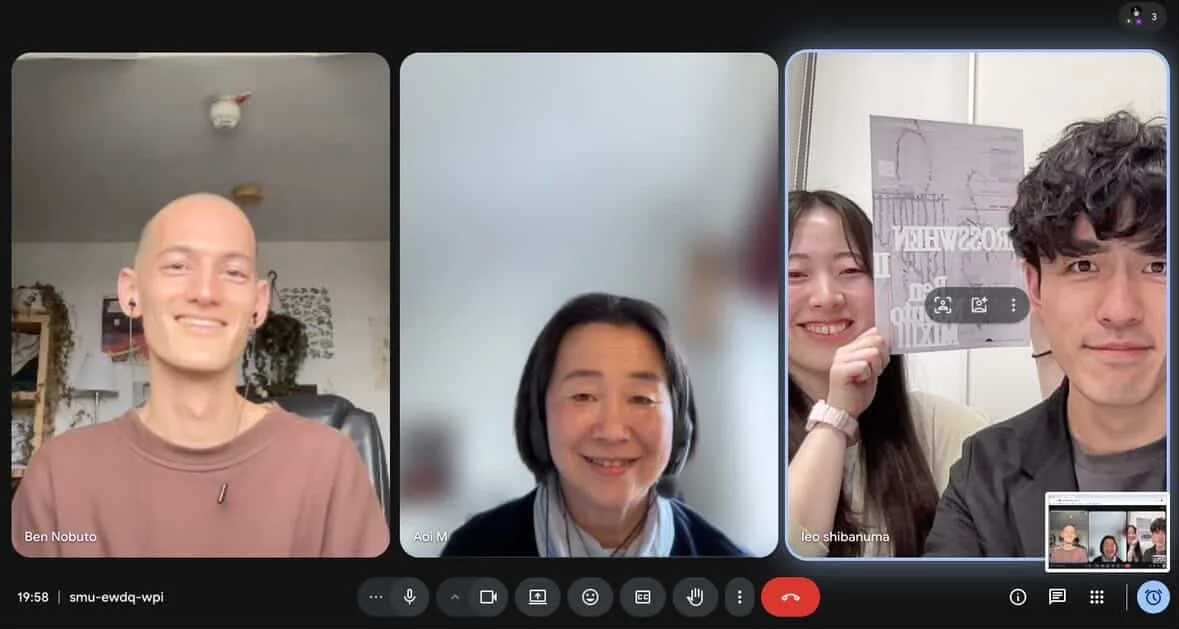
With Leo Shibanuma and Anzu Harigai (interpreted by Aoi Matsushima).